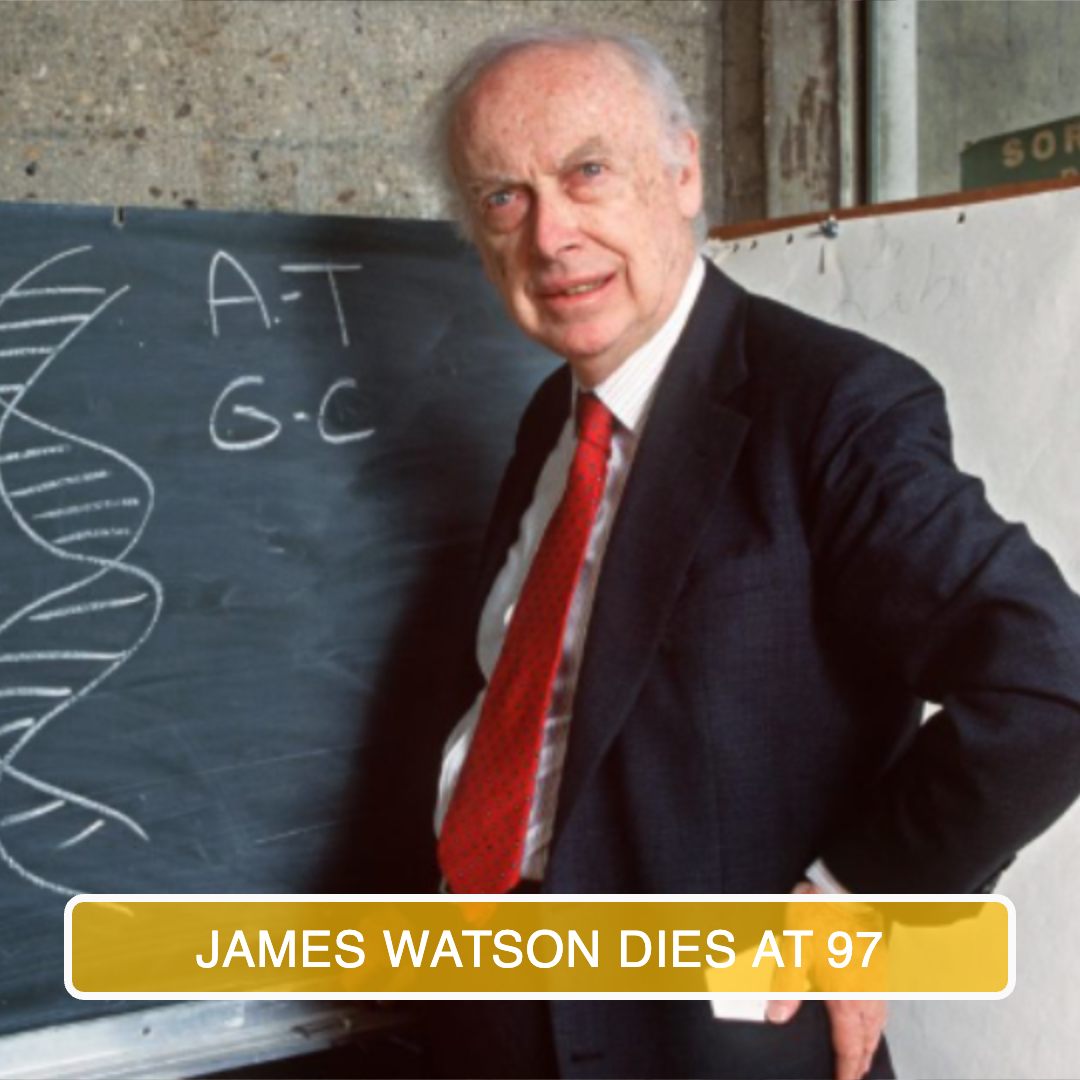
James D. Watson, the molecular biologist who with Francis Crick proposed DNA’s double-helix in 1953, died on November 6, 2025, at a hospice in East Northport, New York. He was 97, according to his family and Cold Spring Harbor Laboratory (CSHL). The discovery, informed by X-ray data from Rosalind Franklin and colleagues, transformed biology and earned Watson, Crick and Maurice Wilkins the 1962 Nobel Prize in Physiology or Medicine. Watson later became an influential institution builder and early leader in the U.S. Human Genome Project, helping cement genetics at the center of modern medicine and biotechnology.
Watson spent decades at Harvard University and CSHL, where he helped elevate the lab into a world-class research center. His legacy was complicated by widely condemned remarks on race and intelligence; public backlash led to his removal from administrative roles in 2007 and CSHL’s later severing of remaining ties, even as the lab formally noted his death on Nov. 7, 2025. His writings, including “The Double Helix,” and advocacy for open genomic data continued to shape debates in science and ethics.